

The Bush Hammer
Tigoni, Kenya
Set on a one acre site in the highlands of Tigoni, Bush Hammer, stands as a fully realized home shaped by patience, restraint, and a deep respect for place. Inspired by colonial era homes of Tigoni and Muthaiga, the four bedroom ensuite villa draws from the classic forms and measured proportions of colonial-era villas, creating a home that is both refined and timeless.


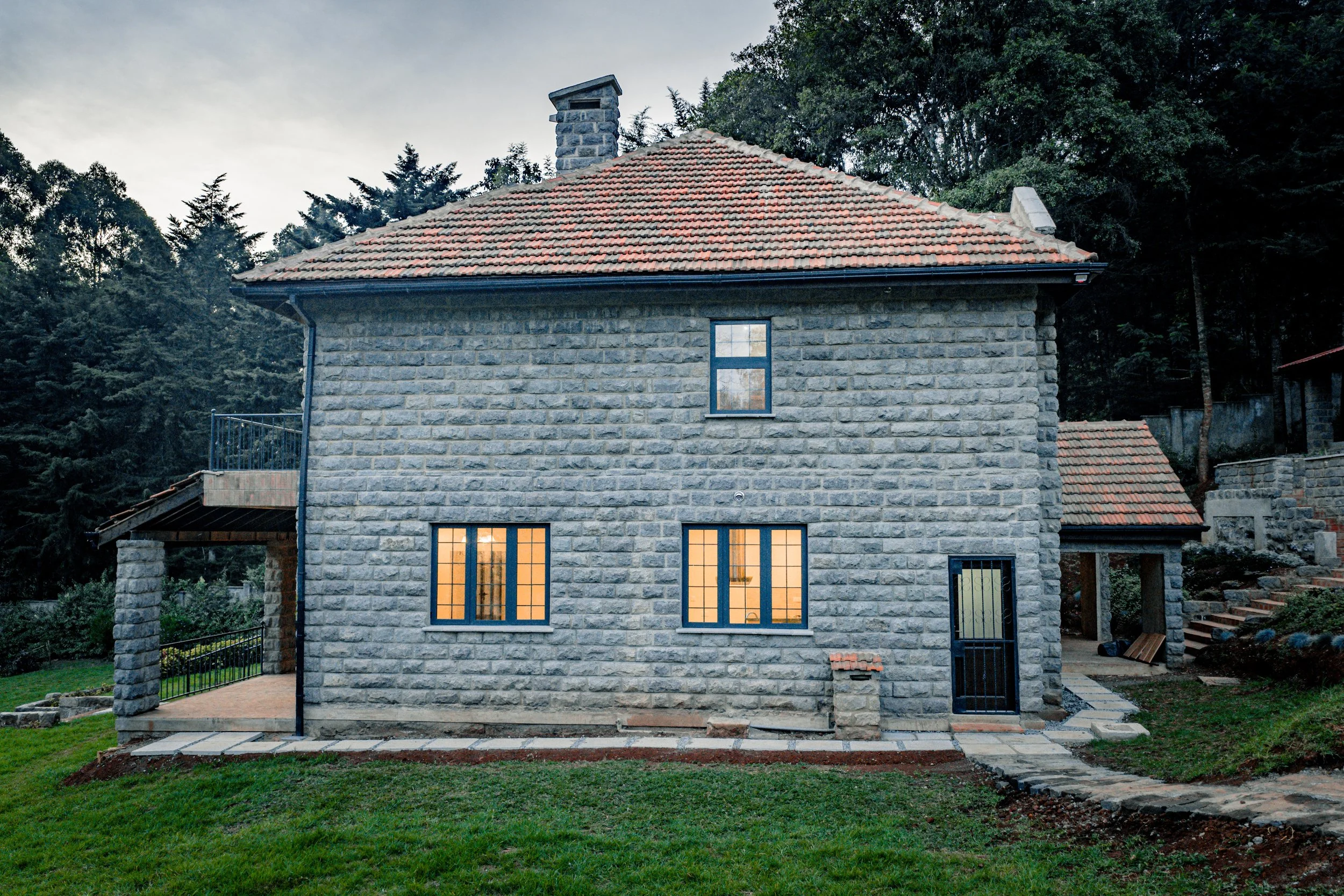


The home takes its name from the bush hammer, a traditional tool used to texture stone, reflecting the spirit and care embedded in the project. This is architecture shaped by hand, where honesty in material and attention to craft guide every decision. The stone walls carry the marks of their making, the timber speaks of the land from which it was sourced, and the metalwork serves as a quiet complement rather than decoration. Together, these elements create a home that feels grounded, enduring, and intimately connected to the surrounding landscape.
Shaped By Hand
Configuration Of The Home
Bush Hammer is organised through a straightforward spatial hierarchy shaped by views, privacy, and the natural slope of the site. The home contains four ensuite bedrooms, with the master suite oriented to capture key views while maintaining privacy from the shared living spaces.
The main living spaces are aligned to the primary view axis, allowing the lounge, dining room, and family room to benefit from consistent daylight and natural ventilation. The verandah extends this sequence outdoors, creating a direct but sheltered connection to the landscape. The kitchen and dining area operate as a semi-independent zone, maintaining privacy from the lounge while remaining accessible for daily use.
Service functions are routed through a secondary circulation path that links discreetly to the domestic staff quarters, ensuring clear distinction between public and service areas.
Symmetry informs the overall organisation of the villa. The plan is composed in three balanced parts, and the window proportions follow a shared system that strengthens visual coherence while opening toward the landscape.
The design responds directly to the terraced site. Arrival and parking occupy the upper level, the main living spaces sit on the central platform, and the gardens extend across the lower terraces. This approach reduces earthworks and allows the structure to settle naturally into the existing terrain.
Sustainable Design But For A Cooler Region
Sustainability in Bush Hammer is addressed through practical material reuse and climate-responsive detailing suited to Tigoni’s cooler conditions. Trees assessed as unsafe were selectively cut, cured on site, and repurposed for joinery and cabinetry, while new trees were planted to maintain ecological balance. Reclaimed doors from demolished buildings were carefully integrated, reducing waste and adding historical depth to the project.
Thermal comfort guided the building envelope strategy. Double glazing with an air cavity improves insulation, a centrally located chimney on both floors provides efficient heating, and timber flooring aids heat retention. Aluminum casement windows were chosen for their tight seals, minimizing drafts and improving overall energy performance.
Bush Hammer is grounded in classical ideas. It draws from the rhythm, repetition, and proportion found in early Greek Revival influences that shaped homes in Muthaiga and parts of Karen. This connection to classical order brings a sense of permanence to the home.